Do I Need A Water Softener In Jacksonville?
Quick Summary: Hard water can quietly damage your plumbing, shorten the life of your appliances, and leave your skin feeling dry. This guide walks Jacksonville homeowners through the signs that you need a water softener, the actual hardness of Jacksonville water and the surrounding metro, the benefits of softening your water, and how a Culligan water softener works. We break down installation, maintenance, and cost expectations so you can decide whether a softener is right for your home.
How To Know If You Need A Water Softener in Jacksonville
If you have ever noticed white crust around your faucet, soap that will not lather, or laundry that comes out feeling rough, the answer to “do I need a water softener?” is probably yes. Hard water is one of the most common water quality issues in Jacksonville homes, and a properly sized water softener removes the calcium and magnesium minerals responsible for the damage.
Throughout this guide, we’ll explain how hard your local water actually is, the signs to watch for, the benefits of softening, and what to expect from professional installation and ongoing maintenance.
How Hard Is Jacksonville’s Water?
Jacksonville’s water is provided by JEA (Jacksonville Electric Authority) through multiple interconnected systems, including the Major Grid (the primary system serving most of Duval County), the Mayport System, Lofton Oaks Grid, Ponte Vedra Grid, and Ponce de Leon Grid. JEA delivers over 120 million gallons of water per day and conducts more than 45,000 water quality tests annually.
Jacksonville’s drinking water comes 100% from groundwater, drawn from the Floridan Aquifer, one of Florida’s most important natural water sources. The aquifer delivers abundant supply but also carries high mineral concentrations that make Jacksonville’s water among the hardest in the Southeast.
JEA’s service area spans the Greater Jacksonville and Gainesville region, covering one of the largest land areas of any U.S. city. The interconnected grid system provides redundancy and reliability across this wide footprint.
Hardness is not the only thing worth knowing about Jacksonville water. The area has a few additional water quality concerns worth mentioning:
- High mineral content and reported violations. The recent Water Quality Report shows chloride at 319 ppm (above the 250 ppm secondary standard), TDS at 876 ppm (above the secondary limit of 250 ppm), and odor above the secondary threshold. These are classified as secondary standards tied to taste and aesthetics rather than health limits, and JEA notes that annual averages remain below the MCL, but the readings reflect Jacksonville’s naturally mineral-dense groundwater.
- Disinfection byproducts. Jacksonville’s recent Water Quality Report shows total trihalomethanes at 70.81 ppb, approaching the federal maximum of 80 ppb, and HAA5 at 27.60 ppb. These form when chlorine reacts with organic matter in the water and are worth watching for households with long-term exposure concerns.
- PFAS and boil water notices. PFAS compounds have been detected at trace levels in Jacksonville’s water supply, including PFPeA (0.9 ppt) and PFPeS (0.6 ppt), both well below federal limits. In March 2026, Jacksonville issued a boil water notice affecting approximately 950,000 residents following infrastructure pressures in the distribution system.
If you live in the Jacksonville metro area and want to know exactly what is in your water, Culligan of Jacksonville offers a free in-home water test that measures hardness, chlorine, total dissolved solids, and other key indicators of water quality.
What Is Hard Water?
Hard water is water with a high concentration of dissolved minerals, primarily calcium and magnesium. As water moves through soil and rock on its way to your tap, it picks up these minerals and carries them into your home. The higher the mineral concentration, the harder the water.
The U.S. Geological Survey classifies water hardness as:
- Soft: 0 to 60 mg/L (0 to 3.5 grains per gallon)
- Moderately hard: 61 to 120 mg/L (3.5 to 7 grains per gallon)
- Hard: 121 to 180 mg/L (7 to 10.5 grains per gallon)
- Very hard: 181 mg/L or higher (10.5+ grains per gallon)
At 7 to 22 grains per gallon, Jacksonville’s groundwater ranges from hard to very hard depending on the neighborhood and aquifer zone. At the upper end of that range, water is classified as very hard and will leave substantial mineral buildup in pipes, fixtures, and water-using appliances.
5 Signs You Need A Water Softener
Most Jacksonville homeowners notice the effects of hard water long before they think to test their tap. Here are the five most common signs you need a water softener:
Limescale buildup. Look for white, chalky deposits on faucets, shower heads, kettles, and around fixtures. This is mineral scale left behind by hard water.
Soap scum. Hard water reacts with soap to form a sticky residue that coats sinks, bathtubs, and shower walls and resists ordinary cleaning.
Difficulty lathering. If you find yourself using extra soap, shampoo, or detergent to get a good lather, the minerals in your water are interfering with the cleaning agents.
Dry skin and dull hair. Hard water can leave skin feeling itchy and tight after showering and make hair feel brittle, frizzy, or hard to manage.
Stained or dingy laundry. Clothes washed in hard water often look faded, feel rough, and wear out faster than they should.
If you notice one or more of these issues in your Jacksonville home, you very likely have hard water. A free water test from Culligan of Jacksonville will confirm exactly how much hardness is present and what the right next step looks like.
Benefits Of A Water Softener
Installing a whole house water softener delivers benefits you can see, feel, and measure. The most important benefits include:
Longer life for plumbing and appliances. Soft water prevents limescale buildup in pipes, water heaters, dishwashers, and washing machines, which can extend the useful life of those appliances by up to 50 percent compared to running them on hard water.
More effective soap and detergent. Soft water lets soap lather better and detergent clean more thoroughly, so you use less of each. According to Culligan, customers can save over $437 per year on soaps, shampoos, and detergents alone.
Softer skin and shinier hair. Soft water rinses cleanly off your skin and hair, which means less irritation after showers and a noticeable improvement in how your hair looks and feels.
Lower energy bills. A water heater that is free of scale operates at peak efficiency. Culligan estimates over $115 per year in gas water-heater energy savings on softened water.
Better tasting drinking water and food. Soft water makes a clear difference in coffee, tea, soups, and other beverages where minerals can mask flavor.
How A Water Softener Works
A water softener removes the calcium and magnesium responsible for hard water through a process called ion exchange.
Inside the softener tank, thousands of small resin beads are coated with sodium ions. As hard water flows through the tank, the calcium and magnesium ions are attracted to the resin beads and trade places with the sodium ions. The minerals stay behind on the resin, and softened water leaves the system to feed the rest of your home.
Over time the resin beads fill up with hardness minerals and need to regenerate. During regeneration, a salt brine solution from the brine tank flushes through the resin tank and rinses the calcium and magnesium ions out, recharging the resin with fresh sodium ions. The system then runs a quick rinse cycle and returns to normal service.
A control valve, run by a meter or timer, manages the regeneration cycle automatically based on your household water use, so you never have to think about it.
Culligan of Jacksonville water softeners use efficient, on-demand regeneration, which means the system only regenerates when it actually needs to, saving salt and water in the process.
Types Of Water Softeners
There are several styles of water softener systems on the market, and the right choice depends on your water quality, household size, and personal preferences:
- Salt-based ion exchange softeners. The most common and most effective option for removing hardness minerals. A strong fit for homes with moderately hard to very hard water.
- Salt-free water conditioners. These systems do not technically remove hardness minerals; they alter the structure of the minerals so they are less likely to stick to surfaces. A good fit for homes with light hardness or homeowners who prefer to avoid sodium.
- Dual-tank softeners. Use two resin tanks so the system can deliver soft water at all times, even during regeneration. A strong fit for very large households or homes with high water demand.
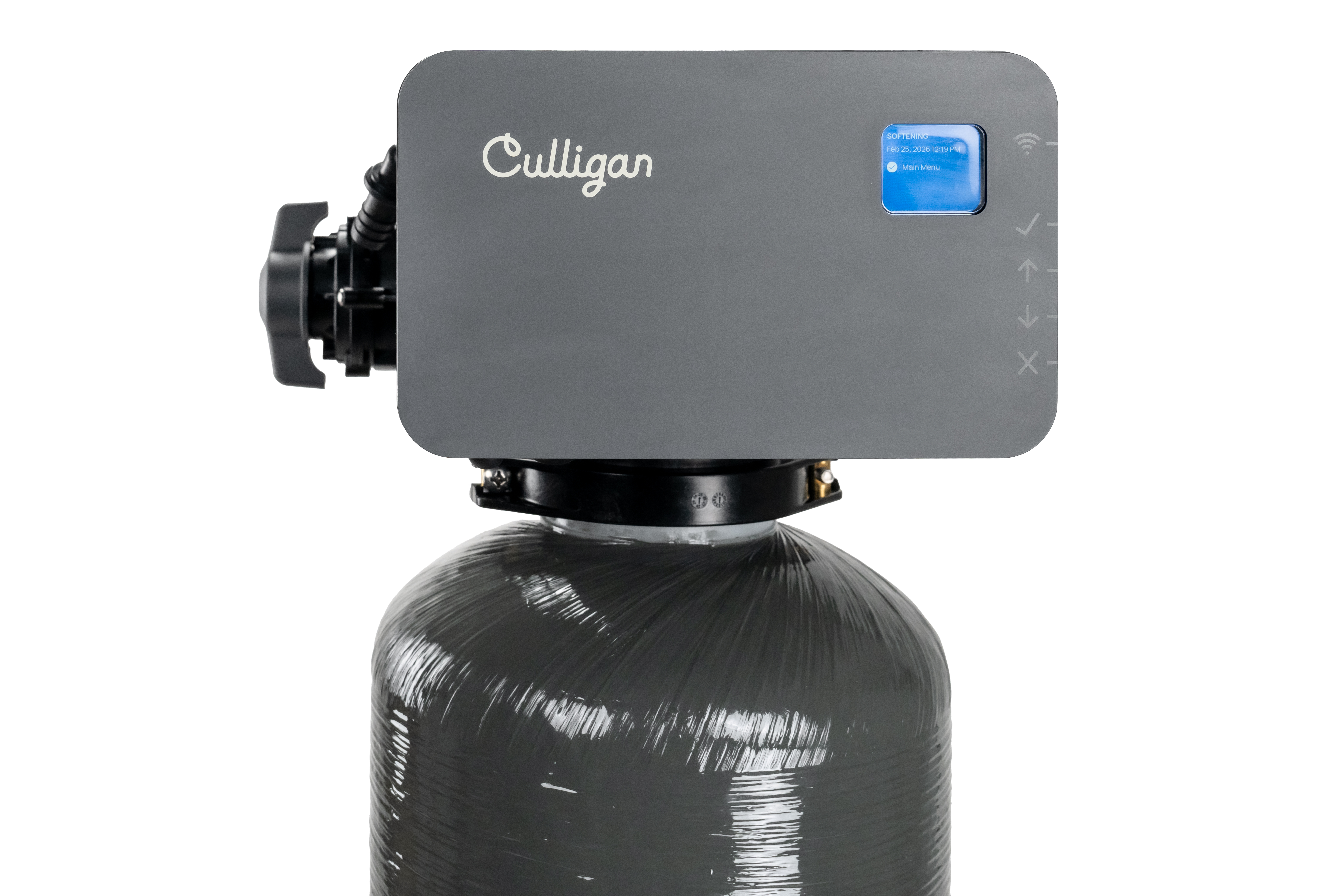
- Smart softeners. Connected models that track water use, salt levels, and system performance from a phone app and notify the homeowner when service is needed.
Installing a whole house water softener delivers benefits you can see, feel, and measure. The most important benefits include:
A water specialist from Culligan of Jacksonville will recommend the right system after testing your water on site, factoring in your local hardness, household size, and budget.
How Much Does A Water Softener Cost In Jacksonville?
Culligan of Jacksonville offers a full line of whole-house water softeners with monthly pricing that typically ranges from $55 to $99, depending on the system you choose and the features it includes.
The total cost of a Culligan water softener depends on a few factors:
- System type. Salt-based softeners, salt-free conditioners, and smart softeners are all priced differently.
- Unit size. Larger households or homes with very hard water need higher-capacity systems.
- Add-ons and upgrades. Smart connectivity, premium resin, and integrated filtration features add to the cost.
- Purchase versus rental. Many Culligan of Jacksonville customers prefer monthly rental plans because they include service and maintenance.
A smart softener typically pays for itself over time. Customers can save over $437 per year on soaps, shampoos, and detergents, see over $115 per year in gas water-heater energy savings, and extend the useful life of dishwashers and washing machines by up to 50 percent compared to running them on hard water.
What To Expect From Water Softener Installation In Jacksonville
Professional water softener installation begins with an in-home water test to confirm hardness levels and any additional concerns. From there, the technician matches the system to your household’s water use and assesses your plumbing for compatibility, which matters in older Jacksonville metro homes that may have copper, galvanized steel, or other legacy materials in the supply line.
On installation day:
- The main water supply is briefly shut off for safety.
- The softener is connected to the main water line, and a drain line is run to your existing waste plumbing.
- The brine tank is positioned near the resin tank and filled with softener salt.
- The system is calibrated based on your local hardness level and household size.
- The technician runs an initial regeneration and tests for leaks.
- The main supply is turned back on, and you start receiving soft water immediately.
Most installations are completed in a few hours, and your Culligan of Jacksonville technician will walk you through normal operation, salt refills, and what to expect over the long term.
Water Softener Maintenance from Culligan of Jacksonville
A properly maintained water softener can last 10 to 15 years or more. Routine maintenance includes:
- Adding softener salt to the brine tank as needed (typically every one to two months).
- Inspecting the brine tank for salt bridging or salt mushing.
- Replacing pre-filters or post-filters if your system includes them.
- Scheduling a professional service visit at least once per year to check resin condition, valve performance, and overall efficiency.
Culligan of Jacksonville offers maintenance plans that take this off your plate entirely, with scheduled service visits and salt deliveries.
Frequently Asked Questions
How do I know if I need a water softener? Watch for limescale on fixtures, soap scum in the bathroom, dry skin after showers, and stiff laundry. A free in-home water test from Culligan of Jacksonville will give you a precise hardness number so you can decide.
Is soft water safe to drink? Yes. Soft water is safe to drink for most healthy adults. The ion exchange process adds a very small amount of sodium to the water (about the same as a slice of bread per glass). If you prefer drinking water with no sodium added, pair your softener with a reverse osmosis system at the kitchen tap.
Will a water softener remove iron, chlorine, lead, or PFAS? A standard softener removes hardness minerals only. To address chlorine taste, sediment, iron, lead, or PFAS (all of which are documented concerns in parts of the Jacksonville metro area), Culligan of Jacksonville recommends pairing your softener with a whole house water filter or a reverse osmosis system at the kitchen tap.
How much salt does a water softener use? Most homes use about one 40 pound bag of salt per month. High-efficiency softeners use significantly less.
Can I install a water softener myself? While some softeners are sold as DIY units, professional installation ensures correct sizing, proper plumbing connections, accurate calibration, and warranty coverage. Culligan of Jacksonville handles every step from water test to setup.
Get A Free Water Test In Jacksonville
If you suspect you have hard water, the next step is simple. Schedule a free in-home water test with Culligan of Jacksonville and find out exactly what is in your water. A water specialist will identify the right water softener for your home, explain your options, and answer any questions, with no pressure.