LET’S MAKE SENSE OF YOUR WATER!
City of Jacksonville Water Utilities (JEA) Water Quality Report
Population Served: 1,000,000+
Primary Water Source: Floridan Aquifer (groundwater wells)
Source: JEA Water Quality Report
DID YOU KNOW water quality reports, also known as “Consumer Confidence Reports (CCRs),” are annual documents that all public water systems are required to provide to you via mail and online. These reports are supposed to provide important information about the quality of the drinking water delivered over the previous year.
They can be difficult to read or understand. They are often many pages long and contain complex tables and charts. Culligan Water wants to change this and help you MAKE SENSE OF YOUR WATER.
This easy-to-read report will provide you with the following:
- Items of interest: Common water issues discussed within your community.
- Potential concerns: Unregulated contaminants that could be a health concern to you or your family.
- Water hardness: The current level of hard water in your area.
The Water Quality Report Legend:
- Health Concern Contaminants that have known health effects that the EPA regulates to protect public health.
- Aesthetic Issue Not necessarily a health risk but can affect your water’s appearance, taste, or odor.
- Unregulated Possible health risk but NO standards set by the EPA. Emerging chemicals and compounds the EPA is gathering data on.
Maximum Contaminant Level (MCL): The highest level of a contaminant that is allowed in drinking water.
Action Level (AL): The concentration of a contaminant that triggers additional action.
Public Health Goal (PHG): The level of a contaminant in drinking water that doesn’t pose a significant risk to health. PHG’s are NOT regulatory standards, and may not be attainable due to current remediation technologies.
ppm: parts per million (mg/L)
ppm: parts per billion (μg/L)
A Summary Of The JEA Water Quality Report
1) Infrastructure & Water System Overview
JEA operates one of Florida’s largest municipal water systems, delivering over 120 million gallons of water each day to homes and businesses across the Jacksonville area.
The system includes more than 130 wells that draw groundwater from the Floridan aquifer, along with dozens of treatment plants and over 4,900 miles of distribution piping. JEA also conducts more than 45,000 water quality tests annually to maintain compliance with state and federal drinking water standards.
2) Water Sources and Usage
Jacksonville’s drinking water comes entirely from groundwater sources within the Floridan aquifer, located hundreds of feet below the surface.
Water is pumped from wells, aerated to remove sulfur odors, and treated at local plants before being distributed throughout the region. This groundwater source is naturally filtered through limestone formations, which contributes to the mineral content found in Jacksonville tap water.
3) Disinfection and Water Treatment
JEA uses a multi-step treatment process that includes aeration, filtration, and disinfection to ensure water safety before distribution.
- Chlorine: Averages ~1.06 ppm
- Haloacetic Acids (HAA5): ~27.6 ppb
- Total Trihalomethanes (TTHMs): ~70.8 ppb
While these levels meet regulatory standards, disinfection byproducts like TTHMs can still raise concerns over long-term exposure, especially since some samples exceeded 80 ppb at individual locations.
4) Minerals and Water Quality Highlights
Jacksonville’s groundwater contains naturally occurring minerals that impact taste, scaling, and overall water performance.
- Fluoride: ~1.06 ppm
- Nitrate (as Nitrogen): ~0.09 ppm
- Sodium: Up to ~126 ppm in some areas
- Hardness (Average): ~260 ppm (≈15 grains per gallon)
This places Jacksonville water firmly in the very hard water category.
Hard water is not a health concern, but it can lead to scale buildup on fixtures, reduce appliance efficiency, and make soaps and detergents less effective.
Items of Interest
Common Tap Water Issues in Jacksonville
The Jacksonville region water supply is safe to drink but can still contain trace levels of certain substances that impact taste, odor, or home fixtures. Here are a few common water quality concerns found across the area.
Chlorine
EPA Max. Contaminant Level: 4.0
Public Health Goal: N/A
Concerns: Cancer, Poor Taste and Smell
Removal: Reverse Osmosis Water Filters, Whole House Water Filters
Nitrate
EPA Max. Contaminant Level: 10
Public Health Goal: 10
Concerns: Blue baby syndrome in infants under six months; can be serious if untreated
Removal: Reverse Osmosis Water Filters, Whole House Water Filters
Fluoride
EPA Max. Contaminant Level: 4
Public Health Goal: 4
Concerns: Overexposure can cause dental or skeletal fluorosis
Removal: Reverse Osmosis Water Filters, Whole House Water Filters
Potential Concerns
Explore Unregulated Contaminants in Jacksonville Water
Unregulated contaminants are substances that the EPA monitors but has not yet assigned enforceable limits for. Jacksonville Water Utilites tests for these compounds to track potential risks and ensure long-term water safety. While levels remain below federal thresholds, these byproducts can still affect water taste, overall health, and household performance over time.
HAA5
EPA Max. Contaminant Level (MCL): 60
Public Health Goal: 0
Concerns: Cancer
Removal: Water Softeners, Whole House Water Filters
TTHM
EPA Max. Contaminant Level: 80
Public Health Goal: 0
Concerns: Cancer
Removal: Reverse Osmosis Water Filters, Whole House Water Filters
Hardness Concerns
Does Jacksonville Have Hard Water?
Yes. Jacksonville has very hard water, averaging around 260 ppm (about 15 grains per gallon) across most ZIP codes.
Some areas exceed 300+ ppm, reaching levels classified as extremely hard water.
This can lead to:
- Scale buildup on faucets, showerheads, and appliances
- Reduced lifespan of water heaters and plumbing
- Soap scum and poor lathering
- Spots on dishes and glassware
A water softener helps reduce mineral buildup and improves overall water performance throughout the home.
Hard Water
Public Health Goal: N/A
Concerns: Dry skin/hair, scale, soap scum, mineral buildup in appliances
Removal: Water Softeners, Whole House Water Filters
Forever Chemicals
PFAS Contaminants in the Jacksonville Area
JEA testing detected trace levels of PFAS compounds, including:
- PFPeA: ~0.0009 ppb
- PFPeS: ~0.0006 ppb
These levels are very low and fall below current federal thresholds. However, PFAS are known as “forever chemicals” because they accumulate in the body over time and do not break down easily. Even at low levels, many homeowners choose to reduce PFAS exposure due to growing research linking them to long-term health concerns.
PFPeA
EPA Max. Contaminant Level: N/A
Public Health Goal: N/A
Concerns: Potential immune system suppression
Removal: Reverse Osmosis Water Filters, Whole House Water Filters
PFPeS:
EPA Max. Contaminant Level: N/A
Public Health Goal: N/A
Concerns: Thyroid Disruption, Developmental Issues
Removal: Reverse Osmosis Water Filters, Whole House Water Filters
Related Materials
Get More Information On Jacksonville Area Tap Water
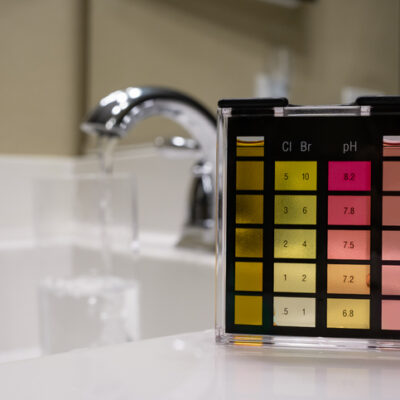
Are There Disinfection Byproducts In Your Water?

Exploring Common Water Contaminants in Jacksonville

Jacksonville Water Contamination: PFAS in Your Water and What It Means
PCBs in Jacksonville Water
The Biggest Reasons Why Water Treatment in Jacksonville Is A Growing Trend

Facebook