
Why Does Jacksonville Well Water Have Iron?
Iron reaches your tap two ways: it dissolves naturally out of the soil and rock as groundwater moves toward your well, and it flakes off as rust when aging pipes, casings, and fixtures corrode. Around Jacksonville, private wells are the usual suspects — iron frequently rides along with the hardness and sulfur that Floridan Aquifer groundwater carries — but corroding plumbing can put rust in city-water homes too.
The EPA treats iron as a secondary contaminant: at typical household levels it’s not a health hazard, but it stains everything it touches, ruins the taste of coffee and tea, clogs appliances, and quietly shortens the life of your plumbing.
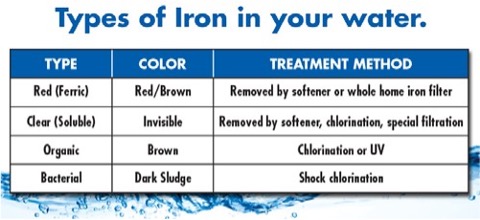
What Are the Four Types of Iron in Water?
Red (ferric) iron is visible — the orange-brown tint and staining you can see. It’s treated with an iron filter like Culligan’s Iron-Cleer® system, which stops rust staining on sinks, fixtures, dishes, and laundry.
Clear (ferrous) iron is dissolved and invisible until it oxidizes after leaving your faucet — common in deeper wells. At lower levels a water softener removes it through ion exchange; higher levels need dedicated filtration.
Organic iron is iron bound to dissolved organic matter like tannins, leaving a black residue — most common in shallow wells influenced by surface water.
Iron bacteria feed on iron and leave dark, sticky sludge — the classic place to spot it is inside your toilet tank. Scrubbing or shock chlorination only knocks it back temporarily; the fix is removing the iron the bacteria live on. Iron bacteria also interact with sulfur to feed the rotten egg smell in well water.
What Does Iron in Water Do to Your Home?
- Stains: yellow, red, or brown marks on laundry; stubborn orange rings in sinks, tubs, and toilets. Lemon juice, vinegar, and baking soda lift them temporarily — the stains return until the iron is removed.
- Metallic taste: ruins coffee, tea, and anything cooked in tap water.
- Clogging: iron deposits choke well pumps, dishwashers, washing machines, and water heaters — repairs cost far more than treatment.
- Softener damage: untreated iron fouls softener resin, which is why iron treatment is installed ahead of softening on well water.
What Water Filter Removes Iron?
It depends on which iron you have — which is why treatment starts with a test, not a product. Clear iron at low levels: a properly sized water softener. Red iron, higher levels, or iron bacteria: an oxidizing iron filter — Culligan’s Iron-Cleer® or, when sulfur is also present, the Sulfur-Cleer® — which converts dissolved iron to filterable particles and removes them at the point of entry. A free in-home water test measures your iron level, type, pH, and hardness so the system matches the problem.
Solutions
Suggested Products
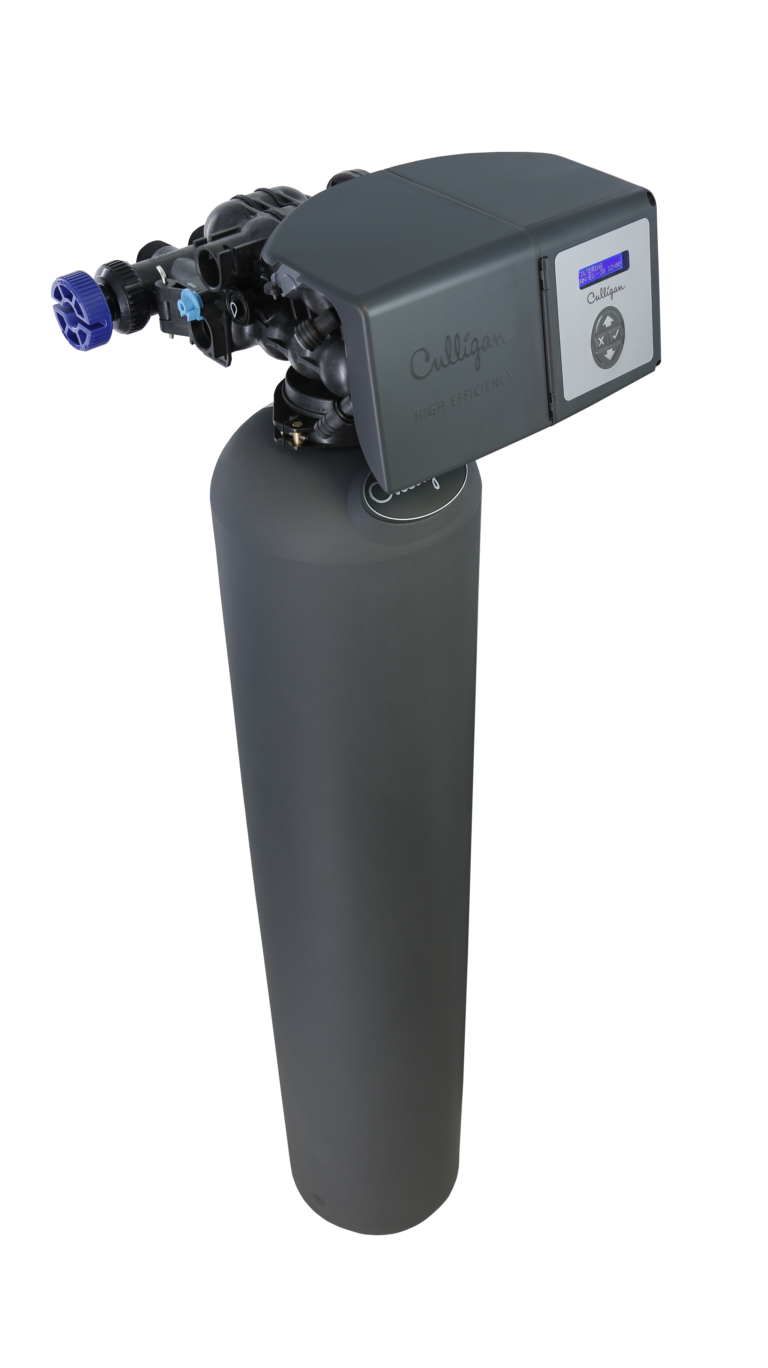
Iron-Cleer® and Sulfur-Cleer® Whole Home Iron Filters
- Removes dissolved and visible iron at the point of entry
- Ends rust staining on fixtures, dishes, and laundry
- Sulfur-Cleer® also removes hydrogen sulfide (rotten egg smell)
- Protects softeners, appliances, and plumbing from iron fouling
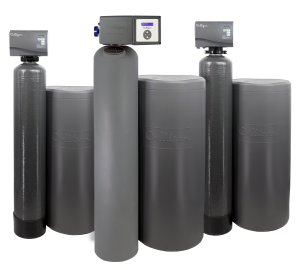
Aquasential™ Smart High Efficiency Water Softener
- Removes clear-water iron at lower levels via ion exchange
- Smart brine tank auto-monitors salt levels
- Convenient auto-bypass valve
- Worry-free maintenance
How Culligan of Jacksonville Can Help
Iron staining is one of the most visible water problems in Northeast Florida wells — and one of the most completely fixable. A local Culligan water expert tests your water at the tap, identifies which type of iron you’re dealing with, and installs the right filter or softener combination, often solving iron, sulfur smell, and hardness in a single system stack.

Facebook